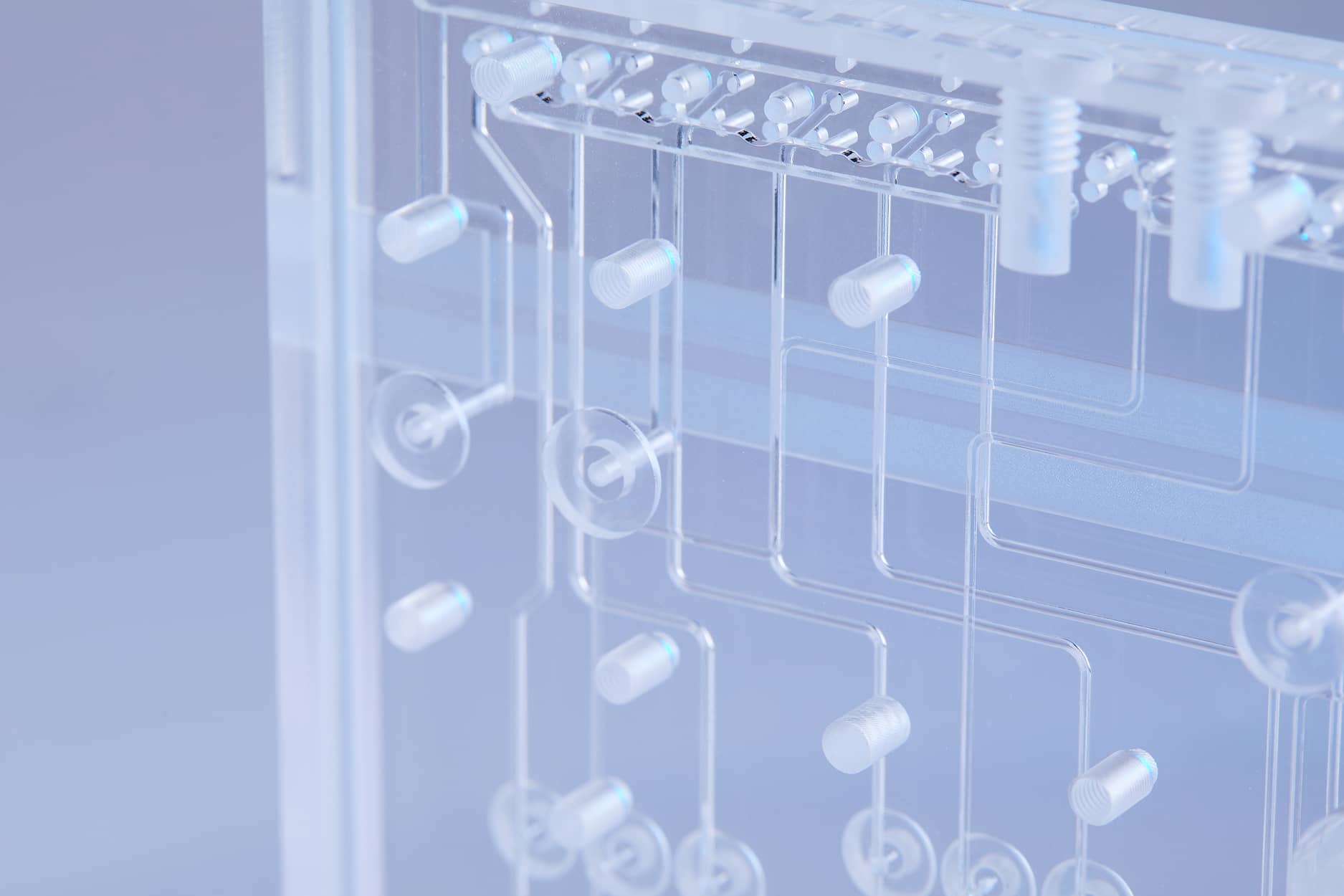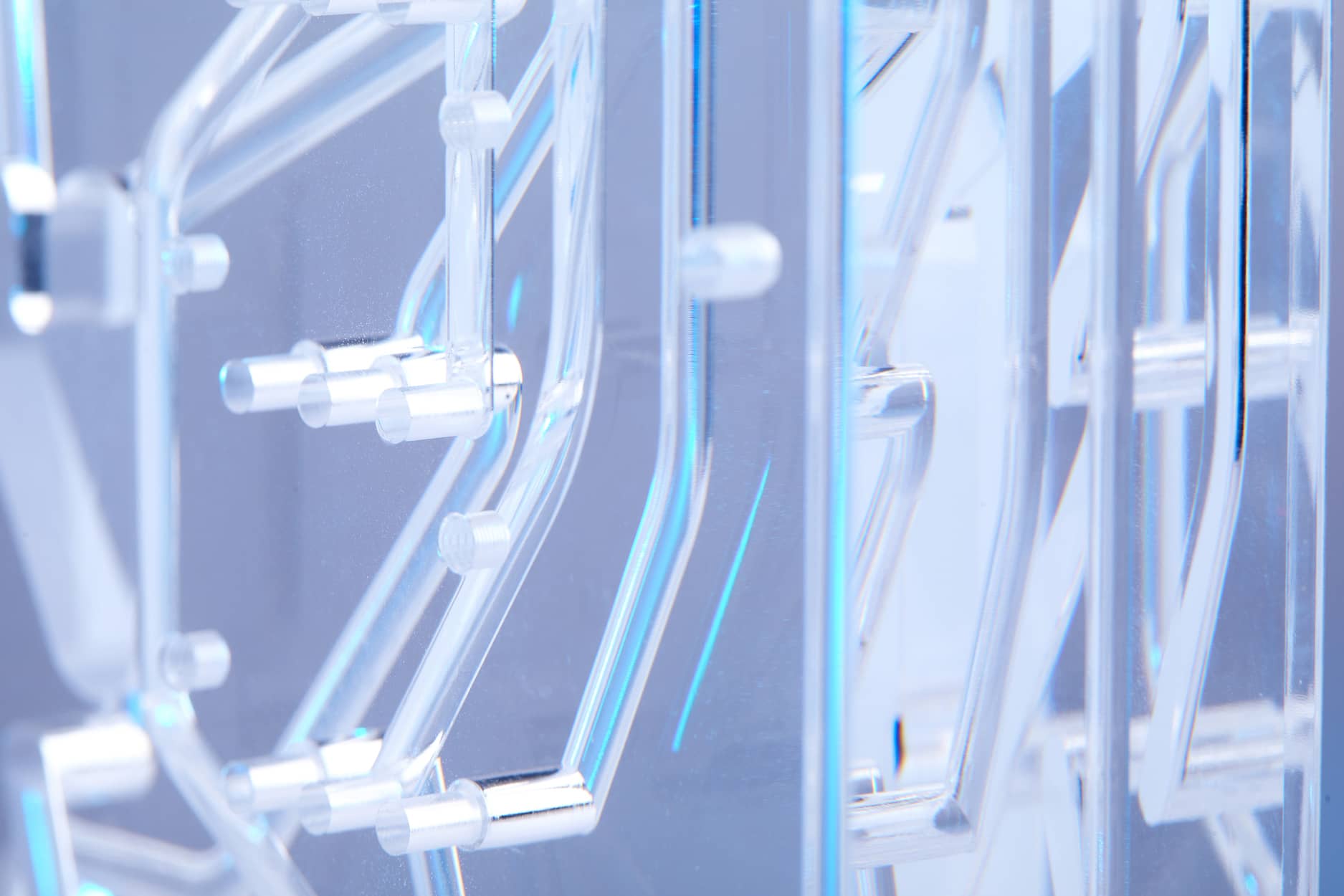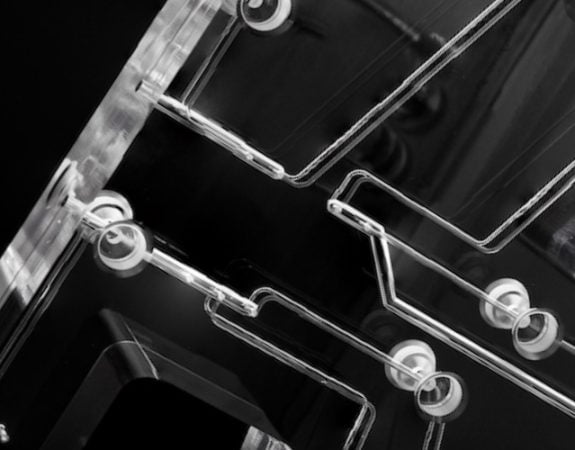
Using IPFL’s 3D Print and Diffusion Bonding microfluidics expertise, our clients maintain a competitive edge in creating unique component manufacturing in the medical, food, and life science sectors.
With more than 50 years of experience, IPFL is at the forefront of microfluidic technology. The company has deep-seated knowledge and expertise in 3D printed microfluidic chip processing, creating devices and chips that play a crucial role in medical, biological life sciences, and food and drink analysis fields. Our 3D-printed microfluidics and microelectronics are engineered to support vital experiments, including mixing channels, flow splitters, optical imaging windows, reagent storage, and introduction routes.


At IPFL, we leverage our extensive experience in microfluidic manufacturing to provide precision instrumentation and components for dynamic growth markets in analysis and research. Whether your project involves rapid micro-analyzing or the development of intricate microfluidic devices, we offer tailored solutions that meet the highest standards of innovation and quality.
Microfluidic Manifolds Defined Microfluidic manifolds and chips are designed for the analysis of minute liquid quantities. They consist of layers of micro-machined plastic, fused together to create intricate microchannels or chambers. These devices are ideal for the analysis of cells, germs, or nanoparticles, operating on a micro-scale.
At IPFL, we manufacture microfluidic devices using a range of high-performance polymers. Each material is selected to meet specific optical, chemical and mechanical requirements.
Our capabilities include 3D printing, CNC machining and diffusion bonding. These processes enable the production of precise microchannels and reliable, contamination-free assemblies.
Explore the material options below or return to the main microfluidics page for a full overview of our technologies and capabilities.
COC Microfluidics Cyclic Olefin Copolymer (COC) offers excellent optical clarity, low autofluorescence and strong chemical resistance — ideal for diagnostics, lab-on-a-chip and optical detection systems. At IPFL, we use diffusion bonding to create clean, adhesive-free assemblies with high-integrity channels.
Acrylic Microfluidics Acrylic (PMMA) is a cost-effective, high-clarity material well suited to prototyping and fluid flow visualisation. Its machinability allows fast turnaround and design flexibility. IPFL produces acrylic microfluidic chips with precise, leak-free channels and good optical quality.
Ultem Microfluidics Ultem (PEI) delivers exceptional thermal stability and chemical resistance, making it suitable for high-temperature environments, aggressive fluids and sterilisation processes. IPFL manufactures Ultem components with high dimensional accuracy for reliable performance in demanding systems.
Polycarbonate Microfluidics Polycarbonate (PC) combines optical transparency with strong impact resistance and durability — a versatile choice across many industries. At IPFL, we produce polycarbonate devices with consistent channel quality, supporting complex multi-layer designs.